A website is only the starting point
Building a website is no longer enough to create a successful digital business. A company can invest in attractive design, fast hosting, modern animations, and strong technology, yet still stay invisible to people who are already searching for its services. A beautiful website without useful content, technical SEO, authority, and a clear customer journey is like opening an impressive office on a road nobody uses.
Visibility also needs a working business system
Search visibility matters, but it is not the whole story. If a business attracts visitors and then responds slowly, loses enquiries, repeats the same manual tasks, or cannot use its own data properly, growth becomes difficult. This is where AI agents and SEO professionals belong in the same strategy. SEO helps the right people discover and trust the business. A well designed AI agent helps that business respond, organize, and serve customers more efficiently after they arrive.
What an AI agent does for a business
An AI agent is more than a chatbot that writes replies. A useful business AI agent can understand a defined goal, use approved company information, connect with allowed tools, complete parts of a workflow, and follow rules set by the business. It can answer common customer questions, qualify leads, summarize emails or support requests, prepare reports, update a CRM, organize tickets, follow up on incomplete forms, and help employees find information across internal documents.
The best AI agent starts with one real problem
Every company does not need a large or complicated AI system. A small business may only need one enquiry agent that collects requirements and sends a clear summary to the right person. A larger organization may need separate agents for customer support, sales operations, reporting, document processing, and internal knowledge. The point is not to add AI because it sounds impressive. The point is to reduce delays, remove repeated work, improve consistency, and give people more time for decisions that need human judgment.
Why businesses are moving toward AI agents
Traditional automation works well when every step follows fixed rules. Real business work is often less tidy. An enquiry may include unclear wording, missing details, urgency, attachments, or several services in one message. An AI assisted lead workflow can read the enquiry, identify the service, judge urgency, prepare a short summary, assign the right team member, and draft a relevant response for human approval. That kind of workflow saves time without removing control.
AI agents need guardrails
A production AI agent should never be treated as magic. It needs a clear job, current business information, limited permissions, human approval for sensitive actions, logs, tests, monitoring, and a direct path to a person when something is uncertain. A business should not give an agent unrestricted access to finance, private customer data, or external communication on day one. Start narrow, measure results, and expand only when the workflow proves reliable.
SEO professionals are still essential
AI can help draft content, suggest keywords, and prepare metadata, but that does not replace SEO judgment. SEO is not simply putting keywords into a page. It includes market research, search intent, website structure, crawlability, technical performance, competition, authority, internal linking, conversion paths, and measurement. A strong SEO professional decides which queries matter commercially, what page type should target each intent, whether Google can crawl the page, and whether traffic is producing real enquiries.
AI search makes quality SEO more important
People no longer discover companies only through traditional blue links. They may use Google AI features, ChatGPT Search, Microsoft Copilot, Gemini, Perplexity, maps, social platforms, or industry directories. That does not remove SEO. It expands it. Content now needs to be easy for people to read and easy for search and answer engines to interpret. Clear headings, direct answers, accurate facts, visible authorship, useful internal links, crawlable images, structured data, and updated publishing information all matter.
Unique content is the real advantage
Thousands of companies can publish another article about the benefits of digital marketing. If every page repeats the same points, none of them gives the customer a strong reason to trust one business over another. Unique content means adding something competitors cannot copy easily: real project experience, lessons from a technical problem, an original workflow, practical screenshots, anonymized results, honest limitations, or expert commentary from the team.
Technical SEO supports every article and service page
Even excellent content can struggle when the technical foundation is weak. Technical SEO helps search engines find, crawl, render, understand, and index important pages. It includes logical architecture, clean URLs, canonical tags, XML sitemaps, robots directives, mobile-friendly rendering, HTTPS, redirects, internal links, structured data, duplicate handling, and fast loading pages. For modern JavaScript websites, this is especially important because a page can look fine to visitors while metadata or links remain difficult for crawlers.
Backlinks still matter, but trust matters more
A backlink from another relevant website can help search engines understand that people recognize or trust your content. Quality matters far more than quantity. One genuine link from a respected source can be more useful than hundreds of random directory links. Safer backlink strategies include original research, practical case studies, expert articles, useful tools, credible business profiles, partnerships, client success stories, and professional community contributions.
A business lesson about entering the market with trust
Technology changes, but trusted business principles remain steady. The story of Hazrat Abdur Rahman ibn Awf (RA) asking to be shown the market after migration to Madinah is a powerful reminder that growth comes from effort, market understanding, trade, and value creation. For modern companies, that lesson still fits: explain what the customer will receive, avoid promises that cannot be guaranteed, disclose limitations, price fairly, deliver the agreed quality, communicate delays, and build relationships beyond one quick payment.
How Verse Next applies a trust-first approach
At Verse Next, technology should create visible business value before it becomes an expense without direction. We focus on practical progress, transparent communication, and fair market aligned pricing. That approach matters for AI agents and SEO because both can be misused when a provider sells big promises without clear outcomes. We begin with the real business problem, recommend technology only when it serves a purpose, protect existing systems, create content for people, and measure outcomes that matter.
AI agents and SEO work best together
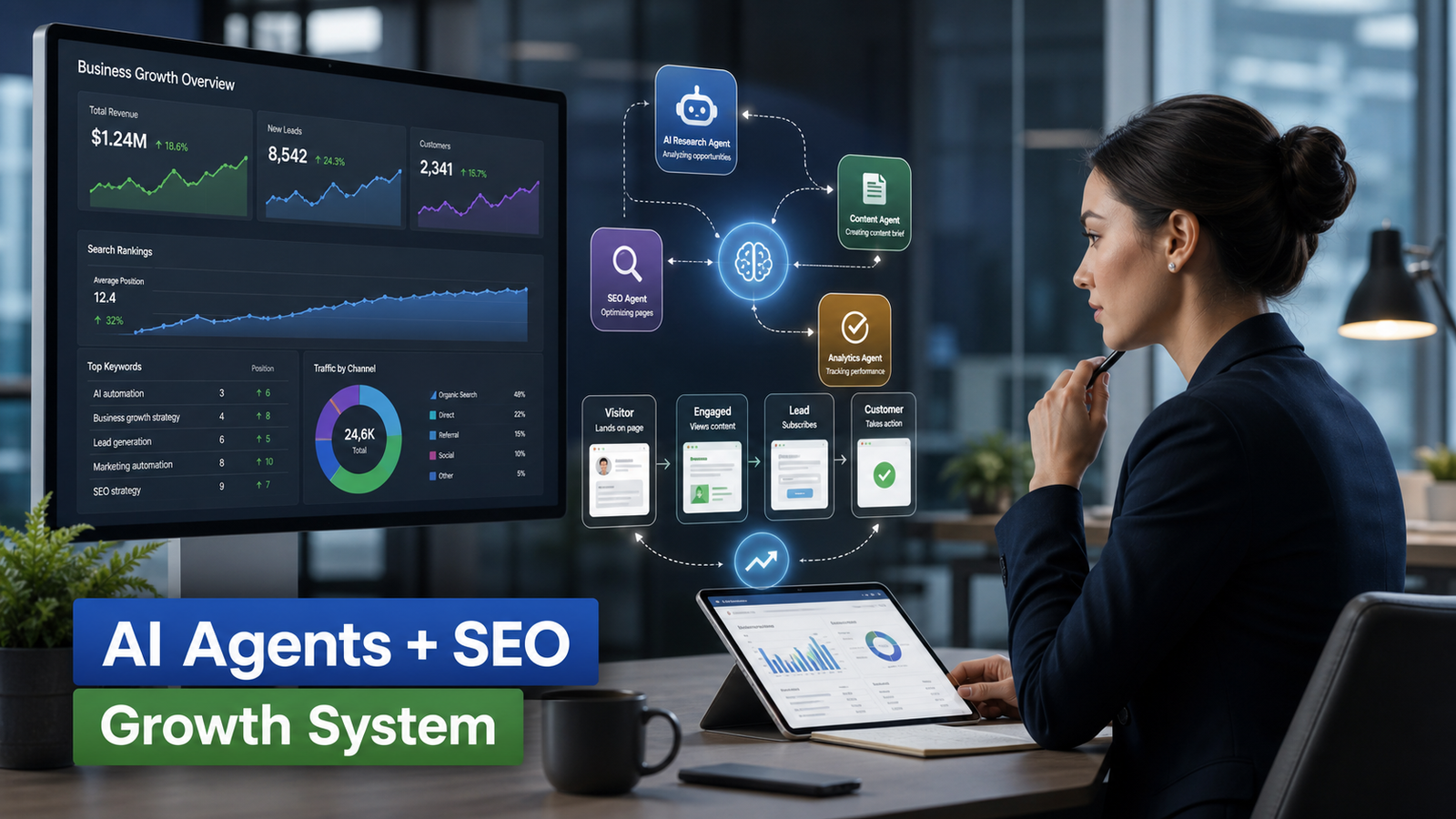
A strong growth journey connects several parts. Unique content answers a real customer question. Technical SEO makes that content discoverable. Authority and backlinks build confidence. The website turns attention into an enquiry. An AI agent answers approved questions, collects requirements, qualifies the lead, updates the CRM, and routes the summary to a person. Human experts guide the relationship and delivery. A good result then creates a review, referral, or case study that strengthens future visibility.
Where businesses should use AI agents first
The best first AI project is usually frequent, time-consuming, rule based, and easy to measure. Good starting points include a customer enquiry agent, lead qualification agent, support triage agent, reporting agent, internal knowledge assistant, or content research agent. The first agent should remove a real bottleneck. A focused workflow that saves time every week is more valuable than a flashy demo nobody uses after launch.
A practical roadmap for AI-ready SEO growth
Start by auditing the business workflow and finding where leads are lost, staff repeat tasks, customers wait, or information becomes hard to find. Then audit the website, indexing, page structure, content quality, keywords, backlinks, analytics, and conversion paths. Choose one AI agent use case with clear inputs, outputs, permissions, and success criteria. Build the SEO foundation, publish original content, add controls to the AI workflow, earn relevant authority, and measure qualified leads, response time, conversion rate, time saved, customer satisfaction, organic visibility, and revenue.
Final thoughts
AI agents can make a company faster, but speed without direction creates mistakes. SEO can create visibility, but visibility without substance does not build authority. Content can attract attention, but generic content does not create differentiation. The strongest businesses will combine useful technology with fair value, transparency, consistency, and trust. A website should not merely exist. It should educate, earn trust, attract the right audience, and support an efficient business behind it.